
Loading ...

Category: Uncategorized

  • Dubai Free Zones Explained: Best Options for Dutch Business in Dubai in 2026

    Dubai Free Zones Explained: Best Options for Dutch Business in Dubai in 2026

    Dutch Business in dubai

    Dubai Free Zones Explained: Best Options for Dutch Business in Dubai in 2025

    The UAE, and particularly Dubai, continues to be an appealing location for Dutch entrepreneurs and investors seeking to expand beyond Europe. One of the biggest advantages for foreign-business setup in Dubai comes from the free zones, which offer streamlined licensing, favourable tax regimes, and foreign-ownership benefits. In this article we’ll explain what Dubai free zones are, what makes them attractive for a Dutch business in 2025, and highlight the best options for Dutch-investor-friendly free zones—so you can make a well-informed choice.

    We’ll draw on intelligence from Dubai Consultant (dubaiconsultant.nl) as our primary source.

    What is a free zone and why it matters for a Dutch business in Dubai

    A free zone in Dubai is a geographically designated area where companies can benefit from a special regulatory regime. According to the Dubai Consultant:

    • Free zones “offer streamlined licensing, minimal bureaucracy, and faster setup than many other jurisdictions.” (dubaiconsultant.nl)
    • They often allow 100% foreign ownership, full repatriation of profits and capital, and exemptions from corporate tax for a certain period. (dubaiconsultant.nl)
    • For a Dutch company, establishing in a Dubai free zone offers access not only to the UAE market but also to regional trade flows, logistics and the Middle East–North Africa region.

    From the perspective of a Dutch investor, the key benefits are:

    • No local partner needed (unlike many mainland company setups)
    • Access to a global hub (Dubai) combined with favourable regulatory/tax setups
    • Ability to base operations (regional HQ, trading company, service entity) and potentially serve the Gulf and beyond

    If your target is to set up a business from the Netherlands into Dubai (import-export, consultancy, tech, e-commerce, logistics), choosing the right free zone is one of the first strategic decisions.

    Key criteria Dutch investors should check

    When considering a free zone for your Dutch business, keep in mind:

    1. Scope of permitted activities: Some free zones are tailored to specific sectors (tech, media, logistics, commodities). Ensure your business activity (consultancy, trading, e-commerce, or manufacturing) is permitted. (dubaiconsultant.nl)
    2. Licence types & cost structure: Setup fees, annual fees, visa quotas, office/warehouse facility requirements all vary.
    3. Ownership, tax & profit-repatriation rules: Confirm 100% foreign ownership, Dutch Business in Dubai, full profit repatriation, and the corporate tax regime (the UAE has introduced corporate tax recently).
    4. Visa & immigration for staff: As a Dutch business you may bring in expatriate employees—check how many visas you can get and the cost.
    5. Physical office/warehouse requirement & flexibility: Some free zones require you to rent space; others allow flex/virtual offices.
    6. Support services & local consulting: Given you’re likely remote from the Netherlands, a helpful local consultant (like DubaiConsultant) can be crucial. (dubaiconsultant.nl)

    Best free zones for Dutch business in Dubai in 2025

    Here are some of the top free zones you should evaluate if you are a Dutch investor or entrepreneur looking to establish in Dubai.

    1. Dubai Multi Commodities Centre (DMCC)

    DMCC is often regarded as one of the most prestigious and flexible free zones in Dubai. While our source (DubaiConsultant) doesn’t name-check each free zone by name in all articles, the general characteristics match those promoted by DMCC (versatility, global trading hub). For a Dutch investor, DMCC offers:

    • Broadly permitted trading, consultancy, services, and commodity-related activities
    • Strong infrastructure in Jumeirah Lakes Towers (JLT)
    • Established international community and networking opportunities

    For a Dutch business that is importing, exporting, trading or providing pan-regional services, DMCC is a strong candidate.

    2. Dubai Silicon Oasis (DSO)

    If your Dutch business is technology, digital, startup-orientated or R&D-based, then Dubai Silicon Oasis (DSO) deserves serious evaluation. Characteristics:

    • A tech-centric ecosystem (“live, work, play”) which appeals to startups and innovative international firms. (Wikipedia)
    • Possibility to combine business and residential (useful if you or staff relocate)
    • Strong infrastructure and modern workspaces

    This makes it a good match for Dutch companies in tech, software, IoT, e-commerce logistics or digital services.

    3. Jebel Ali Free Zone (JAFZA)

    For Dutch businesses with a strong logistics, manufacturing or trading-in-goods component, JAFZA is compelling.

    • Located adjacent to the major port of Dubai and well-suited to warehousing, re-export and heavy trading. (Wikipedia)
    • Good for companies wanting to import goods into the UAE or export outwards, or use Dubai as a regional hub.
    • If your Dutch company has manufacturing, assembly or physical goods in mind, JAFZA could offer scale.

    How a Dutch business should choose and proceed

    Here is a step-by-step approach tailored for Dutch investors:

    1. Define the exact business activity: Will you trade goods or provide consultancy, software, e-commerce fulfilment, or logistics? Choose a free zone aligned with that.
    2. Compare cost & structure: Use a consultant (e.g., DubaiConsultant) to compare licensing cost, Dutch Business in Dubai, visa quotas, office/warehouse rental, and annual renewal.
    3. Legal & tax implications: Check how your Dutch company will interact with the UAE entity (shareholding, dividend flows, and tax treaties between the Netherlands and the UAE).
    4. Choose location & facility: for example, if you need warehousing, choose JAFZA; if tech & services, choose DSO; if general trading, choose DMCC.
    5. Engage a local advisor: Because the free-zone rules, office/visa requirements and compliance are specific,Dutch Business in Dubai, working with an advisor experienced with Dutch investors will streamline things. (dubaiconsultant.nl)

    Dutch Business in Dubai – FAQ

    Q1: Can a Dutch company own 100% of a free-zone entity in Dubai?
    Yes: In most Dubai free zones you can have 100% foreign ownership of your company. That’s one of the major draws of free zones for Dutch investors. (dubaiconsultant.nl)

    Q2: Is my Dutch-based company allowed to trade within the UAE mainland from a free zone?
    Not always. The activity you carry out, and whether you trade directly in the UAE mainland, may have restrictions. DubaiConsultant stresses checking “Free Zone vs Mainland vs Offshore”. (dubaiconsultant.nl)

    Q3: What about corporate tax in Dubai for my free-zone company?
    While free-zones traditionally offered tax advantages,Dutch Business in Dubai, the UAE has introduced broader corporate tax rules. It’s important to check how the new tax regime affects your business and any exemptions. DubaiConsultant highlights the streamlined tax-licensing benefits in free zones. (dubaiconsultant.nl)

    Q4: How long does it take to set up a free-zone company for a Dutch business?
    According to DubaiConsultant: “Setting up a company in Dubai usually takes 1–4 weeks, depending on whether you choose a Free Zone or Mainland setup.” (dubaiconsultant.nl)

    Q5: Do Dutch investors need to relocate to Dubai to run the business?
    No, you don’t necessarily need to relocate. Many free-zone setups allow the owner/resident to be abroad while appointing local manager(s) or using virtual office solutions. However,Dutch Business in Dubai,  having a local presence can facilitate operations, visas and banking.

    Final thoughts: Leverage the free-zone advantage for your Dutch business

    For Dutch companies exploring expansion into Dubai in 2025, the choice of free zone is strategic. It’s not just about registration — it’s about positioning your business in the right ecosystem with the right support, cost structure and growth potential.

    Whether you’re a trading firm, a logistics operator, a tech startup or a Dutch consultancy wanting a regional base,Dutch Business in Dubai,  the free zones of Dubai unlock opportunities. With good preparation, local advisory support (such as that provided by DubaiConsultant) and clarity about your business model, you’ll be well set to benefit from the UAE’s global hub status.

    In your evaluation, emphasise the compatibility of your Dutch business activity, cost and licence structure, logistics/infrastructure, tax/ownership regime, and long-term scalability. Choose the free zone that best aligns with your goals – whether that’s DMCC, DSO, JAFZA or another niche zone – and you’ll offer your Dutch business a solid springboard into the MENA region and beyond.

    Book Your Free Consultation


    Related keywords:

    Dubai free zones
    Dutch business Dubai
    Dubai company setup
    UAE free zone 2025
    Dubai for Dutch investors
    Dubai business expansion
    Dubai trade hub
    Dubai business setup
    Netherlands to Dubai
    Dubai investor opportunities
    • Why ‘Starting a Business in Dubai’ is the Smartest Move for Dutch Entrepreneurs in 2026

      Why ‘Starting a Business in Dubai’ is the Smartest Move for Dutch Entrepreneurs in 2026

      Bedrijf starten in Dubai

      Starting a business in Dubai: Complete step by step guide for Dutch entrepreneurs

      Dubai is one of the most popular destinations for Dutch entrepreneurs who want to expand internationally. Thanks to tax advantages, a strategic location and a stable economy, Dubai offers excellent opportunities for growth.

      In this guide you will discover step by step how to start a business in Dubai, which business structure fits best, what the costs are and how to arrange a visa and bank account.

      Why start a business in Dubai?

      Dubai offers entrepreneurs a strong combination of tax benefits, international accessibility and a stable business climate.

      Main advantages:

      • 100% foreign ownership possible in many sectors
      • No income tax for private individuals
      • Low corporate tax compared to Europe
      • Strategic location between Europe, Asia and Africa
      • Access to international markets
      • Modern infrastructure and stable regulations

      For Dutch entrepreneurs, Dubai is an attractive platform for international growth and tax-efficient business.

      Choose the right business structure in Dubai

      One of the first and most important decisions is to choose the right company structure.

      Free Zone Company

      A free zone company offers 100% foreign ownership, tax breaks and simple creation procedures. This type of company is ideal for international trade, consultancy and online activities. Please note that direct trading within the local UAE market may be limited without an intermediary.

      Mainland company

      With a mainland company you can do business freely within the United Arab Emirates. This is suitable for entrepreneurs who want to operate locally, conclude contracts with government agencies or open physical stores.

      Offshore company

      An offshore structure is often used for international trade, holding activities and asset structuring. These companies usually operate outside the UAE market itself.

      Free Zone vs Mainland – What is the best choice?

      FeatureFree ZoneMainland
      100% propertyYesYes (most sectors)
      Trade within UAEVia Distributorimmediately possible
      Office spaceFlexi-Desk possiblePhysical office required
      Visa quotaLimitedMore flexible
      Ideal forOnline Companies, ConsultancyRetail, local services

      Starting a business step by step in Dubai

      Step 1: Determine your business activity

      The chosen business activity determines the type of license you need and in which jurisdiction you can best establish yourself.

      Step 2: Choose Free Zone of Mainland

      Based on your target market, type of customers and growth plans, you choose the right company structure.

      Step 3: Register trade name and approval

      Your company name is reserved and you will receive initial approval from the authorities.

      Step 4: Apply for business license

      After approval, the official documents are submitted and the company license is issued.

      Step 5: Open business bank account in Dubai

      Opening a business bank account is a crucial step. Banks carry out extensive checks on business activities and the origin of funds. Correct documentation speeds up this process considerably.

      Step 6: Apply for a residence visa

      As a business owner you can apply for an investor visa.

      Important parts of the visa process:

      • Medical examination and biometric registration

      • Reception of an Emirates ID

      • Visa usually valid for 2 years

      • Possibility to sponsor family members

      Step 7: Annual Renewal and Compliance

      Business licenses must be renewed annually. Depending on the activity, accounting, VAT registration or personnel administration may also be required.


      How much does it cost to start a business in Dubai?

      The costs depend on the chosen structure, number of visas and office requirements.

      PartIndication costs
      Business license€ 3,000 – € 12,000
      Visa per person€ 1,200 – € 2,500
      Medical examination & amp; Emirates ID€ 300 – € 600
      Office spacedepending on type
      Annual extensionSimilar to start-up costs

      Cheap packages can have limitations in activities or visas. Expert guidance prevents surprises.

      Taxes for companies in Dubai

      Dubai has an attractive tax climate. However, companies must take into account the recent introduction of corporation tax above a certain profit limit and possible VAT registration at higher turnover. Correct tax planning is therefore essential.

      Why Dutch entrepreneurs specifically benefit from this opportunity

      For Dutch entrepreneurs there are extra plus points:

      • The Netherlands has a high tax burden; So the interesting tax climate of Dubai is attractive.
      • Among Dutch entrepreneurs, the language and culture barrier is relatively low to think internationally; Dubai offers international infrastructure.
      • With your Netherlands experience you can develop unique niche services for European or Asian markets via Dubai.
      • The Netherlands has many export and trade-oriented entrepreneurial thinking – with Dubai you can further globalize that thinking.

      So if you choose as a Dutch investor Doing business in Dubai, then you are both smartly strategic and future-oriented.

      Frequently made mistakes & amp; how to prevent them

      • choose the wrong legal form: For example, choosing a Mainland company while you mainly work internationally. Count on 100% ownership in Free Zone.
      • Underbudget: Count on costs for license, office / virtual office, bank costs, visa. Dubai Consultant recommends a minimum of 6-12 months of capital.
      • Do not engage a local advisor: The legal and administrative environment in Dubai is different than in the Netherlands; A good consultant prevents delays and errors.
      • Do not think about exit and tax protection in the Netherlands: If your place of residence changes or invests through Dubai, check your Dutch tax position and exit obligations.

      Taxes for companies in Dubai

      Dubai has an attractive tax climate, but entrepreneurs must take into account recent regulations such as corporate tax above a certain profit limit and VAT registration with higher turnover.

      7. FAQ – Frequently Asked Questions About Starting a Business in Dubai

      Question: As a Dutch entrepreneur, can I really own 100% of my company in Dubai?
      answer: Yes, in many free zones you can have 100% foreign ownership. Rules may be different for Mainland activities.

      Question: Do I have to physically live in Dubai to start a business?
      answer: No, not necessarily. You do not have to move your home immediately. But applying for a residency visa through your company can offer many benefits.

      Question: How long does it take to set up a company in Dubai?
      answer: That depends on jurisdiction (Free Zone vs Mainland), the business activities and how quickly you submit documents. With guidance it can take a few days to a few weeks.

      Question: Is it mandatory to engage a local consultant?
      answer: Not necessarily in all cases, but it is highly recommended as the laws / regulations are complex and you can save a lot of time, money and errors through experienced guidance.

      8. Conclusion

      For Dutch entrepreneurs who think ahead Starting a business in Dubai Definitely one of the smartest strategic choices in 2026. You combine favorable tax conditions, international access, modern infrastructure and in many cases full ownership. With the right preparation, a reliable partner (such as Dubai consultant) and an eye for compliance, you can set up your company in one of the world’s most dynamic business environments. In addition, you not only use the local benefits of Dubai, but you also create a platform for global growth.

      As a Dutch investor, do you want to take the step to Doing business in DubaiThen this is the moment. Start your plan today, find the right local advisor and make dreams concrete: Founding a business in Dubai Is not a future music – it is the reality for those who now opt for global business.

      Ready to start your business in Dubai?

      Our specialists guide Dutch entrepreneurs and investors from the first orientation to full business establishment in the UAE. You receive clear advice, an appropriate company structure and support with permits, visa and banking.

      Schedule a free consultation today And discover which design best suits your business goals.

      Start your business in Dubai with personal guidance from experienced specialists.

      Doing business in Dubai, Founding a business in Dubai, Investing in Dubai, License Dubai Free Zone, Residential visa Dubai, Doing business in the UAE

      • Real Estate Investment in Dubai: Top Areas for Dutch Investors in 2026

        Real Estate Investment in Dubai: Top Areas for Dutch Investors in 2026

        Real Estate Investment in Dubai: Top Areas for Dutch Investors in 2025 Blog Banner

        Real Estate Investment in Dubai: Top Areas for Dutch Investors in 2025

        Why Dutch investors should consider Dubai

        Real Estate Investment in Dubai: For Dutch investors seeking diversification and strong returns, real estate investment in Dubai offers an attractive proposition. Compared with the Dutch market—where property prices are high, and yield margins are tightening—Dubai presents more favourable regulatory and tax frameworks. For example, in Dubai, there is no income tax or capital gains tax on many property transactions, whereas in the Netherlands, these can reach far higher levels. 

         Additionally, with Dubai’s strategic infrastructure development, rising expatriate population, and growing tourism, there is a strong demand for quality housing and rental properties. For Dutch investors comfortable with an international investment horizon, this market is especially compelling.

        Key Investment Considerations

        Before diving into location selection, Dutch investors should keep several items in front of their minds:

        • Ownership structure & legal regime: Understand freehold vs leasehold, off-plan vs ready-built.
        • Exit strategy & liquidity: Analyse how easy it is to resell, the holding period, and market demand.
        • Financing & currency risk: Whether you invest with Euro funds, whether currency fluctuations matter, and financing options in the UAE.
        • Rental yield vs appreciation: Some areas deliver strong rental yield; others emphasise capital appreciation.
        • Tax & visa consequences: A property may also open visa opportunities.
        • Developer reputation & delivery risk: Especially in off-plan properties, the track record of the developer is vital.

        By aligning with these pointers, Dutch investors can position themselves for success with real estate investment in Dubai. Below are some of the top areas for 2025.

        Top Areas for Investment in Dubai (2026)

        Here are some of the most compelling neighbourhoods for Dutch investors looking at Dubai real estate in 2025.

        1. Business Bay

        Located in the heart of Dubai, Business Bay offers a mix of commercial and residential towers, strong infrastructure, and proximity to major hubs like the Dubai International Financial Centre and the Dubai Mall area. According to Dutch-market commentary, this zone offers rental yields around 6.2% and a strong urban-lifestyle appeal.


        For a Dutch investor seeking both rental income and capital growth, Business Bay represents a balanced choice: you get access to premium apartment stock, good connectivity (metro, roads), and demand from both residents and professionals.

        2. Downtown Dubai

        For those targeting premium and iconic addresses, Downtown Dubai is hard to beat. Home to the Burj Khalifa and within walking distance of the Dubai Mall, properties here carry prestige and command higher rents and resale values. Returns might be slightly lower than in more peripheral zones, but the potential for appreciation and the tourism-rental opportunity is high. Dutch investors who want a trophy asset or to tap into high-end short-term rentals will find this area attractive.

        3. Palm Jumeirah

        For luxury-focused investors, the man-made island of Palm Jumeirah stands out. Villas and high-end apartments on the Palm offer lifestyle appeal, beach access and high desirability. Dutch buyers who want not just investment returns but also perhaps a holiday home element or long-term place to stay can consider this zone. Rental yields may be lower because entry costs are higher, but capital appreciation and demand for holiday-style stays bolster the case.

        4. Emerging & mid-market zones

        While the “headline” zones above get most of the attention, Dutch investors can also examine emerging areas where the entry price is lower but upside exists. Examples include “studio” properties in developing projects, new freeholds outside the traditional core. The key is to identify developers with strong reputations, flexible payment plans, and attractive yield potential. Often, these provide yields in the 5-7% range with lower capital outlay.

        Structuring your investment

        For a Dutch investor planning a real estate investment in Dubai, the practical steps might be:

        1. Define your goal: high rental yield vs capital appreciation vs combination.
        2. Choose your budget: Determine Euro-equivalent cost, take into account currency, taxes, and service charges.
        3. Select area & property type: Apartment vs villa, location, and developer.
        4. Conduct due diligence: Verify title, escrow account, developer track record, and expected delivery date.
        5. Purchase process: Sign the MOU, real estate investment in Dubai, pay a deposit, transfer funds, and register with the Dubai Land Department (DLD).
        6. Manage post-purchase: Property management, rental agency engagement, and possibly a visa application if you qualify.
        7. Exit strategy: Plan holding period, resale path, market timing.

        The fact that Dubai offers visa incentives tied to property ownership (for eligible thresholds) further sweetens the appeal for Dutch investors. 

        Risk factors & mitigation

        Every investment has risks. For Dutch investors in Dubai real estate, these include:

        • Market cycles: Real estate is cyclical; timing matters.
        • Currency risk: Euro to AED fluctuations could impact the return when converted back.
        • Developer or delivery risk: Especially for off-plan.
        • Service charges & maintenance: Especially in luxury developments, fees can be high.
        • Resale market: Liquidity may vary depending on property type, location and demand.
          Mitigation: Select well-known developers, make a real estate investment in Dubai, with a medium-term holding (5-10 years), diversify across zones, and ensure good rental occupancy.

        Why now is a good moment for Dutch investors

        For Dutch investors, the real estate investment in the Dubai market is especially timely in 2025 for a few reasons:

        • The Netherlands property market is showing fewer yield opportunities and rising regulation; Dubai remains more open and yield-friendly.
        • Dubai continues to invest heavily in infrastructure and attract expatriates; demand for rental and ownership housing remains strong. 
        • Freehold ownership and visa incentives strengthen long-term outlook.
          Therefore, entering now with a well-structured plan can position Dutch investors for a strong medium-term return and diversification.

        FAQ – Dutch Investor Focused

        1. Can Dutch citizens buy property in Dubai?
        Yes. Dutch citizens can legally purchase freehold property in many designated areas in Dubai. You do not need to be a UAE resident to purchase real estate. The property ownership rights are secure and governed by the Dubai Land Department (DLD).

        2. What kind of returns can I expect from real estate investment in Dubai?
        Rental yields in Dubai are generally higher than in many European cities. For example, areas like Business Bay and Dubai Marina often provide 5% to 8% gross rental yield, depending on property type and demand. Luxury areas such as Palm Jumeirah may offer lower rental yields but strong potential for long-term capital appreciation.

        3. Are there taxes on property income or capital gains in Dubai?
        Dubai currently does not charge income tax or capital gains tax on property investments. However, investors should check Dutch tax regulations, as the Netherlands may still require a declaration of foreign property or rental income. Real estate investment in Dubai. Consulting a tax adviser familiar with UAE-Netherlands treaties is recommended.

        4. Can I obtain a UAE residency visa through property investment?
        Yes. If you purchase property above a specified value threshold (commonly AED 750,000 to AED 2 million, real estate investment in Dubaidepending on visa type), you may qualify for a long-term residence visa. The visa benefits include staying in the UAE long-term and conducting business activities legally.

        5. How can I pay for property in Dubai as a Dutch investor?
        You can pay via international bank transfer or through UAE-based bank financing (if eligible). Some developers also offer flexible payment plans for off-plan projects. Currency fluctuation (EUR/AED) should be considered in your cost planning.

        6. Do Dutch investors need a local sponsor to buy property?
        No. Property ownership in designated freehold zones is 100% independent and does not require a local sponsor or UAE partnership.

        7. What is the process to buy real estate in Dubai?
        The steps typically include:

        1. Choosing a property and negotiating a price

        2. Signing a Memorandum of Understanding (MOU)

        3. Paying a deposit (usually 5%–10%)

        4. Transferring funds for purchase

        5. Registering ownership with the Dubai Land Department (DLD)

        Closing thoughts

        For Dutch investors seeking stable returns and global diversification, real estate investment in Dubai stands out as a strong opportunity in 2025. The market offers a combination that is increasingly rare in Europe: attractive rental yields, tax-friendly policies, modern infrastructure, and a high-growth economic environment. Dubai continues to expand its residential, commercial, and tourism sectors, which drives consistent demand for quality properties.

        Choosing the right area is essential. Whether you prefer the strong rental demand of Business Bay, the prestige of Downtown Dubai, or the luxury lifestyle of Palm Jumeirah, each location serves different investment goals. The key is to align your property choice with your long-term objectives: rental income, capital appreciation, or lifestyle value.

        Access High-ROI Investment Properties in Dubai.
        • How to Start a Business in Dubai Free Zone: Simplified Process for 2026

          How to Start a Business in Dubai Free Zone: Simplified Process for 2026

          How to Start a Business in Dubai Free Zone: Simplified Process for 2025 Blog Banner

          How to Start a Business in Dubai Free Zone: Simplified Process for 2026

          If you’re a savvy investor looking at global expansion, the prospect of starting a business in a Dubai free zone is very attractive, especially for those who want asset protection, 100% foreign ownership, and tax efficiencies. The UAE’s free zones provide a structured yet flexible environment that supports international operations. Here’s a simplified, step-by-step guide to the process, with a focus on what you need to know in 2026.

          Why Consider Starting a Business in a Dubai Free Zone?

          Investors globally are looking for jurisdictions that combine stability, legal clarity and favourable tax regimes. The UAE delivers on all three, and free zones amplify those benefits:

          • In many free zones you can enjoy 100% foreign ownership — removing the need for a local partner.
          • Free zones offer streamlined licensing, minimal bureaucracy, and faster setup than many other jurisdictions.
          • Low or zero corporate tax regimes, depending on activity and zone, give strong asset protection and tax advantages.
          • Free zones often allow more flexible import/export, easier visa issuance, and dedicated infrastructure for international business.

          When you’re looking to invest internationally with protections for your assets, lower tax drag and global reach, forming your company in a UAE free zone becomes a highly compelling strategy.

          Step 1: Define Your Business Activity & Objectives

          Before diving into paperwork, you need clarity on what your business will do and why you’re using a free zone structure. Ask yourself:

          • Is this a trading, consulting, IT services, finance/asset-management or other professional services operation?
          • Will your main market be within the UAE, regionally, or globally? Some free zones restrict local mainland trade without a distributor.
          • Are you seeking asset protection, global outreach, low tax, or all of the above?
          • Do you require a highly-regulated zone (for e.g., financial services) or a simpler zone suited to SME/consultancy? (More on this below.)

          The team at Dubai Consultant emphasises that matching your business activity to the right free zone is a critical early step.

          Step 2: Choose the Right Free Zone How to Start a Business in Dubai

          Not all free zones are equal. As pointed out by Dubai Consultant, the selection of which free zone you choose impacts cost, regulatory requirements, prestige and suitability.

          Key criteria to evaluate

          • Ownership & licence types (Does the zone allow your specific activity? Professional, trading, financial?)
          • Costs & fees (licence fee, registration, office rental, visa costs)
          • Speed & ease of setup (some zones issue licences very quickly)
          • Regulatory environment & prestige (some zones are more regulated, suited for financial/institutional firms)
          • Location & ecosystem (Does the zone place you close to clients, logistics, talent?)
          • Support services (Visa support, bank account facilitation, compliance/accounting services)

          Example comparison

          • International Free Zone Authority (IFZA): Suitable for SMEs, services, consultancies, and trading. Cost-effective, flexible.
          • Dubai International Financial Centre (DIFC): Premium regulatory environment, suited for financial services, asset management, fintech; higher cost, stricter compliance.

          Asset protection angle

          If your goal is international operations with asset protection, choosing a free zone with strong legal and regulatory frameworks is important. The prestige and regulatory strength of the zone can add credibility to your structure, aiding bank relationships, contracts and risk mitigation.

          Step 3: Set Up Your Company (Incorporation Process)

          Once you’ve selected the free zone, How to Start a Business in Dubai, you head into the practical steps of incorporation. The process may vary by zone, but typically includes:

          1. Apply for preliminary approval: Submit your chosen business activity, company name, and free zone documentation.
          2. Choose a licence type: professional, service, trading, industrial, etc. Make sure it covers your planned operations.
          3. Submit required documents: often, passport copies of shareholders/directors, a business plan/description, and proof of address. Dubai Consultant notes that the documentation and timing vary by zone.
          4. Register the company and obtain a licence: Once approved, you receive a business licence from the free zone authority.
          5. Office space requirement: Many free zones require leasing physical office or flex/virtual space; some allow shared space for smaller operations. Example: IFZA offers flexibility; DIFC may require stricter office standards.
          6. Visa issuance & bank account opening: Once the licence and office are in place, you can apply for UAE residence visas and open a corporate bank account.
          7. Compliance & ongoing obligations: Even in free zones, you’ll have to meet compliance requirements (audits, filings, licence renewals, visa renewals) to maintain your asset protection and tax advantages.

          Dubai Consultant estimates that setting up a company in the free zone context typically takes 1–4 weeks, depending on the zone and activity.

          Step 4: Asset Protection & Tax Advantages

          One of the core reasons international investors choose a free zone structure is for asset protection and tax efficiency. Here’s how these benefits play out:

          Asset protection

          • By using a free zone entity, your business is ring-fenced: corporate liability is separate from personal.
          • Free zone frameworks provide clarity in shareholder rights, share structures and foreign ownership, which boosts legal certainty.
          • Choosing a reputable free zone (with strong legal/regulatory oversight) can increase protection in contracts.

          How to Start a Business in Dubai: Tax and Corporate Benefits

          • Many free zones offer zero (or very low) tax for qualifying activities within the free zone.
          • No withholding tax or low tax on distributions in many cases, which is beneficial when you repatriate profits or manage global cash flows.
          • Ease of repatriating capital and profits helps international operators maintain flexibility.
          • For international investors, the combination of 100% ownership + tax efficiency + structured legal entity equals a very strong platform for global operations.

          Step 5: Launch & Growth – Think Beyond Setup

          Getting your licence is just the start. To build a robust international operation, you should:

          • Build your team (local/residence visas, global talent).
          • Establish a bank account and consider a global payments/invoicing structure. Dubai Consultant has separate advice on bank account setup for foreign companies in the UAE.
          • Plan your operations: shipping/trading routes, service delivery, and regional hubs.
          • Maintain compliance and renewal: licence renewal, how-to-start-a-business-in-dubai, visa renewal, audit/financial filings, and staying in good standing.
          • Use your free zone model proactively: many free zone companies can trade globally (not just in the UAE). How to Start a Business in Dubai aids international outreach.
          • Leverage the prestige/economics of your zone: if you’re in a high-end zone (e.g., DIFC), you gain credibility, which can unlock more sophisticated clients/investors.

          How to Start a Business in Dubai: Frequently Asked Questions (FAQ)

          Q: How to start a business in Dubai?
          A: A free zone company is a business entity established within one of the UAE’s designated free trade zones, which allows for beneficial conditions such as 100% foreign ownership, How to Start a Business in Dubai, streamlined licensing, and often tax-efficient operations.

          Q: Can I move my business from one free zone to another later?
          A: Yes — but it may involve transferring the licence, relocating the office, adjusting visa status and paying applicable fees. The complexity depends on both free zones.

          Q: Do free zone companies allow trading into the UAE mainland market?
          A: Generally, free zone entities are allowed to trade globally or within the free zone. For direct trading in the UAE mainland, you may need a distributor or separate licence. Always check with the free zone authority.

          Q: How long does the setup process take?
          A: According to Dubai Consultant, setting up in a free zone typically takes 1–4 weeks, but this depends on licence type, documentation, free zone and complexity.

          Q: Are there hidden costs I should watch?
          A: Yes — aside from licence fees, you should check visa fees, office rental (even virtual vs physical), renewal costs, audit or accounting obligations, and bank account fees. Some free zones may demand higher minimum representations.

          Conclusion

          If you’re looking for how to start a business in a Dubai free zone in 2026 and want to leverage international operations, asset protection and tax advantages, the UAE remains one of the most compelling jurisdictions. The simplified steps defining your activity, choosing the right zone, incorporating, then launching and growing, are manageable with the right guidance and planning.

          Just remember: it’s not only about the cheapest licence, but choosing the zone that aligns with your business model, how to start a Business in Dubai, growth plans and asset protection strategy. With the right free zone, you can operationalise your global vision from Dubai.

          Start your Dubai company setup with expert support.
          • Company Setup in Dubai: Benefits, Process, and Legal Requirements

            Company Setup in Dubai: Benefits, Process, and Legal Requirements

            Company Set up in dubai

            Company Setup in Dubai: Benefits, Process, and Legal Requirements

            Why Choose Dubai for Company Setup?

            Company Setup in Dubai: Setting up a company in Dubai offers a compelling proposition for international investors seeking stability, growth and asset-protection advantages. The UAE capital has become one of the world’s most attractive business hubs thanks to its strategically located infrastructure, investor-friendly policies and favourable tax regimen. 

            • A low corporate tax environment for many types of entities, helping you protect profits and minimise unnecessary burdens.
            • Access to growing global markets via Dubai’s excellent connectivity and infrastructure.
            • The ability to structure your operations in jurisdictions (for example, Free Zones vs Mainland) where you may retain full or near-full foreign ownership and reduce risk.
            • A pathway to residence via business ownership or investment, which further enhances asset protection and personal tax planning.
            • Transparent, end-to-end support for company formation, banking, licensing and compliance — reducing the time and risks involved.

            Given those advantages, the bold keyword “Company Setup in Dubai” becomes highly relevant for investors aiming to build an international presence with efficient tax and legal structuring.

            Key Benefits of Company Setup in Dubai

            When you undertake a Company Setup in Dubai, you gain several distinct advantages:

            Tax Efficiency & Asset Protection

            By forming a company in Dubai, you tap into a jurisdiction where corporate taxation is very favourable (or even non-existent in certain conditions). The consultancy emphasises that by completing “Company Formation in Dubai … you can save on taxes while building a strong foundation for long-term success”.
            Additionally, if you relocate and deregister your tax residence in your home country, you may significantly reduce your global tax exposure.
            For asset protection, using a well-structured company in the UAE allows separation of business risk, legal liability and investment assets — delivering a robust framework for safeguarding your interests.

            Ownership Flexibility & Jurisdiction Choice

            Dubai offers multiple jurisdictions: Free Zones (often 100% foreign ownership) and Mainland setups (which may require a local sponsor depending on activity). The right choice ensures optimal ownership structure, licence flexibility and market access.
            Free Zones are particularly attractive for global operations with low local market involvement, while the Mainland may suit businesses targeting the UAE population directly.

            Streamlined Process & Support Services

            The consultancy notes that managing licences, documentation, bank account opening and legal compliance in Dubai can be “hassle-free” if you utilise expert guidance.
            This means you minimise delays, lower risk of mistakes (which can cause rejections or cost overruns) and can focus on your core business rather than bureaucratic steps.

            Path to Residence & Lifestyle Advantages

            A well-structured company often paves the way for a residence visa in the UAE, which brings personal benefits such as tax-efficient living, global mobility and a stable regulatory regime.
            Combined with the strong infrastructure and international outlook of Dubai, this makes the jurisdiction appealing for investors who also want a business-friendly home base.

            The Process of Company Setup in Dubai

            The journey of establishing your company in Dubai can be broken down into key phases. Below is a typical roadmap based on the guidance from DubaiConsultant.

            Free Consultation & Planning

            Every business begins with clarifying your purpose: what business you will conduct, where you will operate from (Free Zone vs Mainland), what licence type you need, what your investment and visa goals are.
            At this stage, you also consider whether you will restructure your home-country tax residency and what your global business model will look like.

            Choose Structure, Jurisdiction & Licence

            Select whether you will incorporate in a Free Zone or on the Mainland, determine the legal entity type, select the licence category and decide on physical premises if required. Each decision influences cost, scope and regulatory implications.
            Your consultant will help you match your business activity to the correct licence and ensure your ownership and visa strategy align with your goals.

            Documentation & Legal Requirements

            You will need to prepare documents such as passport copies, proof of residence, business plan, lease agreement (if applicable), nominee agreements (if applicable), shareholder details and more. The process must adhere to local regulatory requirements.
            Your consultant will review everything to avoid common pitfalls (e.g., wrong licence, missing documentation) that could delay or derail the setup.

            Company Registration & Licence Issuance

            Once the documentation is approved, the registration with the relevant authority (for example, the Free Zone Authority or the Dubai mainland department) takes place, and you obtain your business licence. This legally enables you to commence operations in the UAE.
            The adviser helps you navigate the registration, apply for approvals, and ensure your licence covers the activities you intend.

            Visa, Bank Account & Accounting Setup

            With your company established, you will often proceed to apply for residence visa(s), open a corporate bank account, and implement accounting/bookkeeping systems. These are essential to make your business functional, compliant and operational in Dubai.
            A consultant will assist with choosing a bank, meeting KYC requirements, setting up accounting that meets UAE standards, and advising on tax/VAT compliance.

            Ongoing Compliance, Growth & Scaling

            Company setup is not a one-off event: you must maintain compliance (licence renewals, accounting, audits, tax filings), adapt your business as it grows (e.g., add new activities, switch to Mainland from Free Zone) and remain alert to regulatory changes.
            Your adviser may continue to support you in real-estate acquisition, expansion of operations, adding visas, or relocating tax residency.

            Legal Requirements and Considerations

            When you adopt a Company Setup in Dubai, you must be aware of several legal and regulatory requirements to ensure that you are fully compliant and protected.

            Jurisdiction & Ownership Structures

            • Free Zones: Typically allow 100% foreign ownership and simplified processes.
            • Mainland: Foreign ownership rules vary by business activity; a local sponsor or partner may be required.
              Selecting the correct structure is crucial as ownership, liability, tax and business scope differ between jurisdictions.

            Licence Type & Activity-Scope Restrictions

            Your trade licence must correspond to the activities you carry out. Engaging in activities not covered by your licence may result in fines or revocation. The adviser emphasises matching activity to the licence as part of the planning phase.

            Documentation & Legal Compliance

            Your company must satisfy document requirements: passports, proof of address, business plan, lease agreement, shareholder/responsible officer details, etc. Errors or omissions may delay approval or lead to rejection.

            Tax, Accounting & Home-Country Obligations

            Although Dubai is tax-efficient, you still need to register for VAT (if applicable), maintain accounting records, and understand your home country’s tax residency and exit tax obligations.
            If you are relocating, you may need to deregister your residence in your home country to avoid ongoing tax liability.

            Banking Requirements & KYC

            Opening a corporate bank account involves rigorous Know Your Customer (KYC) procedures, documentation, proof of business structure, shareholders, licence and more. Using a professional consultancy makes this smoother.

            Ongoing Renewals & Regulatory Updates

            Your licence will require renewal annually (or per the applicable term). You must monitor regulatory changes, maintain compliance and adapt your business structure as needed. Failure to comply may affect your company or visa status.

            Company Setup in Dubai- FAQ

            Here are some frequently asked questions around Company Setup in Dubai:

            Q1. How long does it take to set up a company in Dubai?
            Timelines vary depending on structure (Free Zone vs Mainland), licence type, and documentation. With expert guidance, it can take from a few days to a few weeks.

            Q2. Do I need to be physically present in Dubai to complete the setup?
            Not always. Many formalities can be handled remotely via a consultant, though certain steps (visa stamping, bank meetings) may require presence depending on the bank or jurisdiction.

            Q3. Can I open a bank account immediately after company registration?
            Yes, but bank opening can be one of the more complex steps due to KYC, documentation and regulatory requirements. Having a consultant assist significantly simplifies this.

            Q4. Will I be able to live in Dubai if I set up a company there?
            Yes — a company setup in Dubai can lead to a residence visa for the owner/shareholder, enabling you to live in the UAE and benefit from its residency privileges.

            Q5. What about taxes in my home country when relocating to Dubai?
            You should plan for the “exit tax” and deregistration of your tax residence in your home country if you are relocating. A professional consultancy helps you manage this risk and fully benefit from Dubai’s tax advantages.

            Summary & Final Thoughts

            If you are considering Company Setup in Dubai with the aim of establishing international operations and protecting your assets, the jurisdiction offers strong benefits: tax efficiency, ownership flexibility, strategic location, and robust support services. However, success depends on selecting the right business structure, jurisdiction, licence type, meeting legal requirements and ensuring ongoing compliance.

            Working with a specialist consultancy helps you navigate the complexity, reduce risk, save time and focus on growth — rather than paperwork and regulatory surprises. The  Company Setup in Dubai is more than just a phrase — it is your strategic first step toward global expansion and asset-protection.

            See Our Company Formation Services in Dubai
            • Real Estate Investments in Dubai in 2026 Return Risks and Smart Structure

              Real Estate Investments in Dubai in 2026 Return Risks and Smart Structure

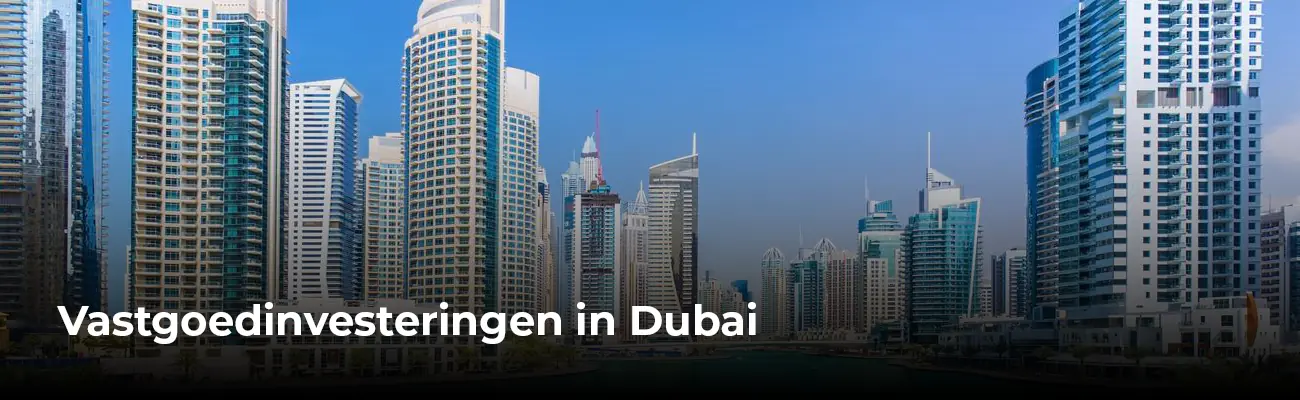
              Vastgoedinvesteringen in Dubai

              Top Luxury Real Estate Investments in Dubai: Best Areas to Buy in 2026

              In 2026, Dubai will remain one of the most attractive real estate markets in the world. International investors choose Dubai not only because of the high return, but also because of the stable business climate and the tax benefits in the United Arab Emirates. More and more buyers are combining real estate investments with the establishment of a Dubai company to efficiently manage rental income, structure assets, or expand international activities. In this guide, you can read where investing is interesting, which returns are realistic, and how you can strategically set up your investment.

              Why the real estate market in Dubai in 2026 is so attractive

              Tax benefits for investors

              In Dubai, there is still no annual property tax and no capital gains tax for private individuals. This makes investing in real estate particularly interesting compared to many European countries.

              Residence options for investors

              Depending on the amount of the investment, buyers may be eligible for long-term residence permits. As a result, Dubai is not only an investment destination but also an attractive residential location.

              Currency stability

              The UAE Dirham is linked to the US dollar. This limits exchange rate fluctuations and offers extra security for international investors.

              Why choose real estate investments in Dubai in 2026?

              Dubai has developed into one of the most dynamic real estate markets in the world. The government continues to stimulate new projects, improve the quality of life, and make the city more accessible to international investors.
              Important advantages of Real estate investments in Dubai are:

              1. Tax-free income: No income tax or capital gains tax.
              2. Strong rental market: annual returns between 6% and 10%.
              3. Stable currency and regulations: Safe and transparent transactions.
              4. Tourist attraction: More than 16 million visitors per year.

              These factors make Dubai a hotspot for investors seeking value, safety, and growth.

              Top areas for luxury real estate investments in Dubai (2026)

              1. Palm Jumeirah – The icon of luxury

              Palm Jumeirah remains the model of opulence. With its beach villas, high-end apartments, and views of the Arabian Gulf, this island is perfect for those who want to combine prestige with returns.
              Investment benefit: High value increase and stable rental demand from expats and tourists.

              2. Downtown Dubai – the heart of modern life

              Downtown is home to the Burj Khalifa and the Dubai Mall. Luxury apartments in this area attract business professionals and international travelers.
              Investment benefit: High rental income due to central location and premium facilities.

              3. Dubai Marina – for the modern lifestyle

              With its lively marina, restaurants, and nightlife, Dubai Marina remains a favorite choice for young professionals.
              Investment benefit: Excellent ROI and high liquidity.

              4. Business Bay – Business Hub with Residential Potential

              Business Bay is Dubai’s fastest-growing business district, where living and working go hand in hand.
              Investment benefit: Strong demand from companies, investors, and expats.

              5. Jumeirah Village Circle (JVC) – Affordable Luxury

              JVC combines luxury and affordability. The modern infrastructure, green spaces, and strategic location make it ideal for families.
              Investment benefit: Rising real estate values and lower entry costs.

              Many investors also set up a company in Dubai to professionally manage their real estate portfolio and to efficiently structure income.

              Luxury trends in real estate investments in Dubai

              1. Smart Homes: Smart technology increases comfort and energy efficiency.
              2. Durability: Green buildings with LEED certification are gaining popularity.
              3. Serviced Apartments: Luxury with hotel services is on the rise.
              4. Residences with brand names: Projects in collaboration with brands such as Armani and Bulgari attract international buyers.

              These trends reinforce the appeal of Real estate investments in Dubai for 2026 and beyond.

              Expected returns on real estate in Dubai in 2026

              The gross rental yield in Dubai, depending on location and type of real estate, is often between 6 and 9 percent per year. Short-term rental in popular areas can generate higher yields, while long-term rental offers more stability.

              For comparison: in many large European cities, returns are often between 2 and 4 percent. Dubai, therefore, offers a higher income potential, although this also includes other market dynamics and risks.

              Legal benefits and property rights

              Dubai offers 100% ownership rights to foreign investors in freehold areas. This means that foreigners have full control over their property – a unique advantage in the Gulf region. In addition, modern regulations and transparent processes facilitate the buying, selling, and renting out of real estate.

              Future perspective: Dubai 2040 Urban Master Plan

              The Dubai 2040 Urban Master Plan is focused on sustainable growth, with new residential zones, green projects, and smart infrastructure. This plan guarantees that the value of real estate will continue to rise in the long term – a crucial factor for serious investors.

              Tips for successful real estate investments in Dubai

              1. Investigate the location – Choose areas with proven demand.
              2. Analyze efficiency – Check rental prices and maintenance costs.
              3. Work with reliable brokers – Choose certified consultants with experience.
              4. Think long term – Real estate in Dubai offers the highest profits in the medium to long term.
              5. Note developers – Choose projects from established names such as Emaar, Nakheel, and Damac.

              Risks and points for attention when investing in Dubai real estate

              Just like any real estate market, Dubai also has price fluctuations. Values can rise or fall depending on economic developments, supply, and demand. With off-plan projects, it is important to carefully assess the developer and the project.

              Other important points for attention are:

              • Market cycles and price fluctuations
              • Liquidity per district or type of property
              • Service costs and annual maintenance
              • Legal Control and Escrow Regulations

              A successful investment is not only about location, but also about a good legal and financial structure.

              How Dubai Consultant Supports Real Estate Investors

              Many investors choose to structure their real estate through a company in the UAE. This can offer benefits in terms of management, financing, and wealth planning.

              Dubai Consultant helps with:

              • Establishing a property management company
              • Opening a business bank account for rental income
              • Structuring international investments
              • Advice on accommodation and business opportunities

              Do you want to invest in Dubai and, at the same time, professionally set up your structure? Then plan a no-obligation consultation with our specialists.

              Our buying property in Dubai as a foreign investor guide covers the full legal process, freehold area rules, and step-by-step purchase timeline so you know exactly what to expect.

              Frequently asked questions (FAQ)

              1. Is 2026 a good time to invest in real estate in Dubai?
                For many investors, 2026 remains an attractive moment to enter the real estate market of Dubai. The city still has strong population growth, a stable investment climate, and continuous infrastructure development. In addition, the tax benefits, such as the lack of capital gains tax for private individuals, continue to play an important role. However, it is important to properly analyze market dynamics per location and type of real estate and to use a long-term strategy.
              2. As a foreign investor, can I set up a company for real estate management?
                Yes, foreign investors can set up a company in the UAE to professionally manage real estate. This is often done to structure rental income, manage multiple objects, or organize international investments clearly. Depending on the situation, a free zone, mainland, or other company structure may be suitable. A good legal and tax organization is essential here.
              3. How do I open a bank account in Dubai for rental income?
                To receive rental income, a bank account in the UAE is usually required. This can be a personal account or a business account when the property is managed through a company. Banks usually require documentation such as passport copies, proof of address, ownership documents, and – with a company account – company license and formation documents. The process differs per bank and can take several weeks, depending on the background of the investor and the chosen structure.
              4. What annual costs are included in addition to the purchase price?
                In addition to the purchase price, investors must take into account recurring costs. This includes service costs for the maintenance of the building or complex, management costs for rental, insurance, and any costs for property management. For apartments, service costs are usually calculated per square meter. In addition, there may be costs for legal and administrative management, especially when the real estate is held through a company structure.
              5. Is investing in Dubai safe for foreigners?
                Yes. Foreign investors have full ownership rights in freehold areas and are protected by clear property laws.
              6. What is the average return on Real estate investments in Dubai?
                The annual return usually varies between 6% and 10%, depending on location and type of home.
              7. Are there taxes on real estate in Dubai?
                No. There are no income or capital gains taxes, which makes Dubai extra attractive.
              8. Can I buy a property without living in Dubai?
                Yes, many investors buy real estate remotely through reliable brokers and legal representatives.
              9. What are the best areas to invest in 2026?
                Palm Jumeirah, Downtown Dubai, Business Bay, Dubai Marina, and JVC remain the top choices for returns and luxury.

              Conclusion

              The future of Real estate investments in Dubai looks extremely promising. With strong economic growth, tax-free benefits, and world-class infrastructure, Dubai remains the ideal destination for those who want to combine luxury and profit.

              Whether you are looking for a second home, a passive source of income, or a strategic investment, 2026 is the perfect year to buy in Dubai.

              Discover high-yield real estate in Dubai.  –  free consultation.

               
              • From the Netherlands to Dubai: Build a Tax-Free Business Empire

                From the Netherlands to Dubai: Build a Tax-Free Business Empire

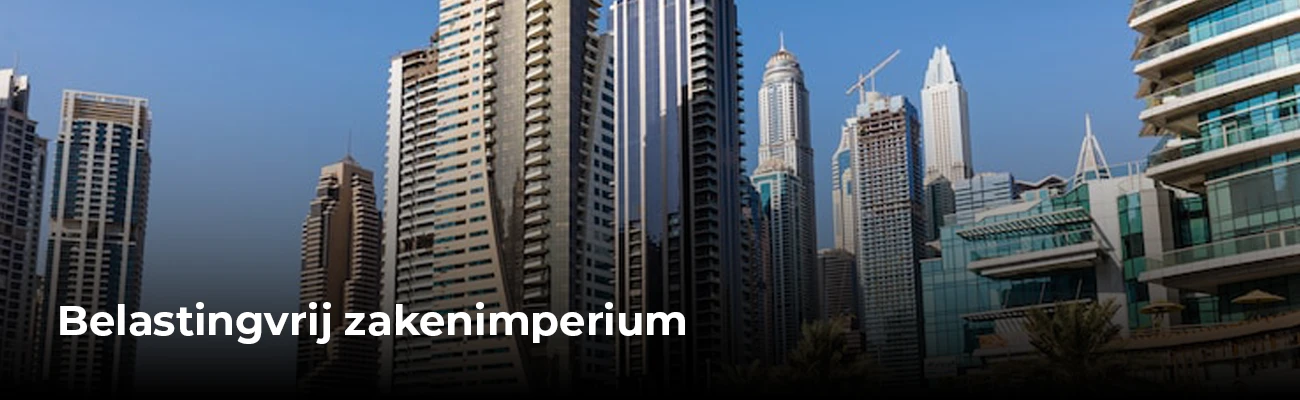
                Belastingvrij zakenimperium

                From the Netherlands to Dubai: How to Build a Tax-Efficient Business in the UAE

                More Dutch entrepreneurs are looking at Dubai, not just for the tax benefits, but for the full package: a free zone structure, international banking, and a legal residence that actually works. This article walks you through the steps: from understanding your Dutch exit obligations to choosing the right UAE business structure.

                Why Dutch Entrepreneurs Choose Dubai

                For Dutch entrepreneurs, Dubai offers a combination that is hard to find in Europe: low corporate tax in qualifying free zones, no personal income tax, 100% foreign ownership, and a fast business setup process. But the move only works if you handle the Dutch side correctly, particularly around exit taxes and deregistering your tax residency.

                Step 1: Map Your Current Dutch Tax Situation

                Before moving anything to Dubai, you need to understand your current Dutch situation. Are you a tax resident in the Netherlands? Do you have a BV or eenmanszaak that still generates Dutch-sourced income? What is your exit tax exposure? A proper Dubai tax advisor will review all of this before you set up a single entity in the UAE.

                Step 2: Choose the Right Business Structure in Dubai

                In Dubai, the three main structures are: a free zone entity, a mainland LLC, or a holding structure. Each has different tax implications, ownership rules, and access to the UAE domestic market. The right choice depends on where your clients are, what your business does, and how you plan to use the company long-term.

                IMPORTANT POINTS:

                • Free zone: often attractive due to 0% corporation tax (depending on sector) and full ownership by foreigners.
                • Mainland: access to local market, Tax-free business empire But different rules and sometimes higher costs.
                • Holding structure: Convenient to centralize international income, participations and investments.

                Step 3: Ensure Tax Compliance and Optimization

                A well-designed company is only really profitable when the tax chain is also right. a reliable Tax advisor in Dubai Ensures that you not only benefit from low taxation, but also comply with all rules regarding VAT (VAT), international treaties, reports and audit obligations. (Dubai consultant)

                for example:

                • Registration for VAT if required in the UAE.
                • Structuring intercompany transactions or fees in a legal manner.
                • Recording your tax residency status so that you can take advantage of Dubai’s benefits.

                Step 4: Build up you Tax-free business empire

                Now that your foundation is on, you can continue to build: think about expanding with new markets, integrating real estate,Tax-free business empire or setting up holding companies and subsidiaries. Dubai’s central location makes it easy to operate in Europe, the Middle East, Africa and Asia.

                With the advice of one Tax advisor in DubaiCan you invest strategically:

                • Real estate in Dubai as part of your portfolio.
                • Serving international customers through your Dubai company.
                • Optimizing costs, centralizing revenue, and minimizing tax burden.

                Step 5: Choose the right partner – The tax advisor in Dubai

                The success of your international company depends strongly on the right guidance. On the website of Dubai Consultant (Netherlands) it is emphasized that their team focuses on “exit tax in your home country”, cross-border tax planning, compliance and guidance in business formation in Dubai. 

                What should you pay attention to when choosing a partner?

                • Experience in both UAE legislation and international tax.
                • Transparent cost structure, without hidden “nasteen”.
                • Integrated services: business formation, visa, bank account, accounting, tax advice.
                • Good references and clear track record. 

                FAQ – Frequently asked questions about you Tax-free business empire and Tax advisor in Dubai

                Question 1: Is my company in Dubai really completely tax-free?
                No, not anyway. It depends on the chosen structure, sector, turnover and location (free zone versus mainland). A good tax consultant helps you find out which tax rules apply to your situation. (Dubai consultant)

                Question 2: Can I just forget my Dutch tax liabilities as soon as I sit in Dubai?
                Not just like that. Your Dutch situation must be settled correctly: exit obligations, change of tax residency, reports etc. A tax consultant guides you in this, so that you avoid double liabilities. (Dubai consultant)

                Question 3: What does such a tax consultant cost in Dubai?
                The costs vary greatly, depending on the size of your company, the number of jurisdictions, the complexity of your structure. A transparent office offers a clear quotation in advance. You can find a good indication at Dubai Consultant. (Dubai consultant)

                Question 4: What is more important: the free zone or mainland structure?
                Both have their advantages and disadvantages. Free zone is often attractive to international trade without local market; Mainland gives access to the UAE market. Your business model determines what is smarter. The tax consultant helps choose. (Dubai consultant)

                Question 5: How certain do I have that everything is legal?
                If you work with a good tax consultancy firm that is aware of the latest UAE laws, international treaties and compliance requirements, the chance of problems is small. Ensure complete transparency yourself and follow their advice. (Dubai consultant)

                Conclusion

                Building an international company from the Netherlands to Dubai – a real one Tax-free business empire – is absolutely feasible, if properly furnished. It’s all about the right structure, tax compliance and choosing the right partner: an experienced Tax advisor in Dubai. When you bring these elements together, you not only create a fiscally efficient company, but also a solid foundation for global growth.
                Are you ready to take the step? Let the adventure begin today – with the right guide by your side.

                Call in expert tax advisers in Dubai.
                • UAE Residence Visa – Types of Residence Visa In Dubai

                  UAE Residence Visa – Types of Residence Visa In Dubai

                  Residence Visa In Dubai

                  UAE Residence Visa – Types of Residence Visa In Dubai


                  If you’re looking to relocate, invest, or build your future in the UAE, understanding the
                  Residence Visa in Dubai is crucial. Whether you’re an entrepreneur, investor, professional or family-minded individual, there are visa paths tailored to your goals. With the right guidance from a trusted Dubai visa consultancy, you can navigate the UAE residence visa process with confidence.

                  What is the Residence Visa in Dubai?

                  A residence visa in Dubai is a permit issued by UAE authorities that allows foreign nationals to live (and in many cases work or invest) in Dubai for a specified period of time. According to the Dubai consultant, this timeframe typically ranges from 2 to 10 years, depending on the visa category. Dubai Consultant

                  Having this visa not only secures your legal stay in the UAE but unlocks many benefits: a tax-friendly environment, business opportunities, family sponsorship and more.

                  Why the UAE Residence Visa Matters

                  • Tax advantages – One of the biggest draws is the possibility of living in a jurisdiction with no personal income tax and favourable corporate tax schemes. Dubai Consultant
                  • Business freedom – Setting up a company in Dubai often goes hand-in-hand with the residence visa process. Once you complete your company formation, you become eligible for the visa. Dubai Consultant
                  • Family & lifestyle – The visa often allows you to sponsor your spouse and children; you gain access to Dubai’s high-quality lifestyle, healthcare, education, and global travel ease. Dubai Consultant
                  • Investment & growth – It enables you to purchase property, invest in businesses, and tap into the UAE market as a base for global operations. Dubai Consultant

                  Types of Residence Visas for Dubai

                  1. Investor Visa (Investeerdersvisum)

                  This visa is designed for individuals who form or invest in a company in Dubai. If you launch a business (on the Mainland or in a Free Zone) you become eligible to apply for this visa. Dubai Consultant


                  Key benefits:

                  • Allows you to reside in Dubai while your company operates
                  • Enables sponsoring dependents (spouse/children)
                  • Opens doors to bank account setup, property purchase
                    The UAE residence visa process here typically involves registering the company, preparing documentation, applying, taking medical tests and obtaining biometrics. Dubai Consultant

                  2. Property Owner Visa (Eigenaarsvisum Vastgoed)

                  This type is for those who purchase qualifying real estate in Dubai. Buying a property above a certain threshold can trigger eligibility. Dubai Consultant
                  Benefits:

                  • Residency linked to your investment property
                  • Ability to live in Dubai and sponsor family
                  • Access to UAE’s real estate market
                    The steps on how to get a residence visa in Dubai steps here follow investment, documentation, visa stamping and Emirates ID.

                  3. Golden Visa (Gouden Visum)

                  A longer-term visa (5-10 years) is awarded to serious investors, entrepreneurs and property buyers in the UAE. Dubai Consultant
                  Highlights:

                  • Extended validity (making it ideal for long-term planning)
                  • Prestige and stability
                  • Often fewer renewal burdens
                    The process is more rigorous but offers greater reward. A professional Dubai visa consultancy like Dubai Consultant can guide you through eligibility, documentation and application.

                  4. Work-Linked Residence Visa (Werkgerelateerd Verblijfsvisum)

                  Typically tied to employment or sponsorship by a UAE company. While not always labelled separately on the website source, it falls under general residence visa procedures.
                  You’ll usually need an employment contract, employer sponsorship, medical tests and visa issuance through immigration.

                  5. Family Residence Visa (Familieverblijfsvisum)

                  Granted when you sponsor family members under your visa (spouse/children). Though the core applicant holds the primary visa, family sponsorship is an important extension.
                  Benefits:

                  • Residence for family under your visa
                  • Access to UAE schooling & healthcare for dependants
                    The process involves proving your income, accommodation and the primary visa’s validity.

                  The UAE Residence Visa Process (Het Proces)

                  Understanding the UAE residence visa process is key to efficient application. Below is a generalised step-by-step guide based on Dubai Consultant’s information. Dubai Consultant

                  1. Select the Visa Type
                    Decide which visa fits your situation: investor, property owner, golden visa, employment or family sponsor.
                  2. Prepare Documentation
                    Common items: passport copies, proof of investment/purchase, company registration, medical exam application, photographs, etc.
                  3. Register Company / Purchase Property
                    For investor or property owner visas, you’ll typically need to have established a company or acquired property first.
                  4. Apply for the visa.
                    Submit your application through immigration, the Free Zone authority or the relevant issuing body.
                  5. Medical Test & Biometrics
                    You’ll undergo a standard medical examination and provide biometric data (fingerprint, photo).
                  6. Visa Stamping & Emirates ID
                    Once approved, your residence visa is stamped in your passport, and you apply for the Emirates ID card (UAE identity).  
                  7. Family Sponsorship (if applicable)
                    With a valid visa, you may apply to sponsor dependents.
                  8. Renewal & Compliance
                    Visas have expiry dates (typically 2-3 years for standard, up to 10 for golden) and must be renewed per rules.

                  Wondering exactly how long each of these steps takes and what it costs in 2026? See our detailed breakdown of Dubai residence visa processing time for timelines per visa type and the documents Dutch applicants need.

                  How to Get a Residence Visa in Dubai (Hoe Verkrijg je een Verblijfsvisum in Dubai)

                  Here are some practical tips on how to get a residence visa in Dubai:

                  • Engage a trusted Dubai visa consultancy early. Expert guidance speeds up approvals and avoids errors.
                  • Choose the right jurisdiction: Free Zone vs Mainland decisions matter for investment, ownership and visa eligibility. Dubai Consultant
                  • Ensure your investment or company formation is compliant — this is often the foundation of the visa eligibility.
                  • Budget appropriately for visa costs, medical tests, documentation and renewals.
                  • Keep your documentation up-to-date (passport validity, investment validity, accommodation proof).
                  • For family sponsorship, ensure you meet the minimum income/accommodation criteria of authorities.
                  • Understand exit tax and home-country tax obligations if you’re relocating from another country. Dubai Consultant

                  Why Work with a Dubai Visa Consultancy?

                  When it comes to navigating visa applications, many hurdles arise: regulatory changes, investment thresholds, documentation, and legal approvals. That’s why using a professional Dubai visa consultancy like Dubai Consultant can be invaluable. They offer:

                  • Expert guidance on company formation, investment thresholds and jurisdiction selection. Dubai Consultant
                  • End-to-end support: business setup, tax advisory, visa processing, real estate investment and compliance. Dubai Consultant
                  • Transparent pricing and tailored solutions rather than “one-size-fits-all”. Dubai Consultant
                    Engaging such a consultancy smooths out the entire journey — from deciding how to get a residence visa in Dubai to long-term renewal and compliance.

                  FAQ – Frequently Asked Questions

                  Here are some of the most common questions around Residence Visa in Dubai.

                  Q1: How long does a residence visa in Dubai last?
                  A: Typically, standard residence visas last for 2-3 years and must be renewed. Golden Visas may last 5-10 years. Dubai Consultant

                  Q2: Can I sponsor my family with my residence visa?
                  A: Yes. Once you hold a valid residence visa, you can usually sponsor a spouse and children under certain criteria (income, accommodation, etc.). Dubai Consultant

                  Q3: Do I need to physically live in Dubai to keep the visa?
                  A: While you don’t always have to be present full-time, authorities expect you to maintain residence ties. Some visa types may require physical entry at regular intervals. Dubai Consultant

                  Q4: What are the minimum investment thresholds for property-based visas?
                  A: For property owner visas, there is often a minimum property value requirement (which may vary). Refer to the consultancy for current thresholds. Dubai Consultant

                  Q5: Does setting up a company guarantee a residence visa?
                  A: It makes you eligible, but visa approval still depends on meeting immigration criteria, documentation, health checks and visa stamping. Dubai Consultant

                  Q6: How complex is the UAE residence visa process?
                  A: The process involves multiple steps (company formation or investment, documentation, application, health checks, stamping). That’s why specialised visa consultancy support is recommended. Dubai Consultant

                  Final Thoughts

                  Securing a residence visa in Dubai opens up a world of possibilities — from business growth and investment to global mobility and family security. Whether you’re an investor, entrepreneur or relocating professional, choosing the right visa type and following a clear UAE residence visa process makes all the difference.

                  Working alongside a reputable Residence Visa in Dubai streamlines your journey, mitigates risk, and accelerates success. So if you’re asking how to get a residence visa in Dubai, the answer lies in clarity of your goals, proper structuring, compliance, and expert support.

                  With careful planning and the right partner, your dream of living and working in the UAE can become a confident reality. Start your journey today — your gateway to Dubai awaits.

                  Need Help Choosing the Right Visa? Our Experts Are Here.
                  • Business Consultancy in Dubai – Your Trusted Partner for Business Success

                    Business Consultancy in Dubai – Your Trusted Partner for Business Success

                    Business Consultancy in Dubai

                    Business Consultancy in Dubai – Your Trusted Partner for Business Success

                    Business Consultancy in Dubai – Dubai has become a global magnet for entrepreneurs and investors due to its strategic location, favorable tax laws, and world-class infrastructure. However, starting a business in a new country can be complex without proper guidance. That’s where business consultancy in Dubai plays a vital role – helping investors navigate legal processes, business structures, and licensing with ease.

                    In this article, we’ll explore the importance, benefits, and role of business consultancy in Dubai, how it supports entrepreneurs, and why choosing the right consultancy partner ensures your long-term success.

                    Understanding the Role of Business Consultancy in Dubai

                    A Business Consultancy in Dubai serves as a professional advisor that assists investors and entrepreneurs in setting up and managing their businesses efficiently.

                    Whether you want to establish a Mainland, Free Zone, or Dubai consultant company, consultants provide end-to-end solutions, including:

                    • Legal documentation
                    • Trade licence acquisition
                    • Visa assistance
                    • Corporate bank account opening

                    With expert guidance, you can start your business confidently, ensuring full compliance with UAE laws and regulations.

                    Key Benefits of Business Consultancy in Dubai

                    Hiring a professional business setup in Dubai provides numerous benefits that simplify your journey and strengthen your business foundation. Below are the major advantages.

                    1. Business Consultancy in Dubai Offers Expert Guidance:-

                    When entering a new market, understanding local regulations is crucial. A Business Consultancy in Dubai brings deep local knowledge, ensuring you meet all legal and regulatory requirements.

                    Consultants assist in:

                    • Selecting the right business structure (LLC, branch, or sole establishment)
                    • Applying for trade licences
                    • Understanding tax and labor laws

                    Their expertise helps you avoid mistakes that could delay your business launch.

                    2. Save Time and Costs with Business Consultancy in Dubai:-

                    Setting up a company involves numerous approvals, documents, and renewals. A Business Consultancy in Dubai manages all these steps efficiently, saving you valuable time and money.

                    Instead of navigating complex processes alone, consultants handle everything — from DED approvals to visa processing — allowing you to focus on your business operations and growth.

                    3. Business Registration  in Dubai Provides Customized Solutions:-

                    Every business has unique goals. A professional Business Consultancy in Dubai offers tailored solutions based on your industry, business model, and budget.

                    They help you decide whether to establish your company in the Mainland (for local trading) or a Free Zone (for 100% foreign ownership). This personalized approach ensures your setup aligns perfectly with your strategic objectives.

                    4. Ensure Legal Compliance with Business Consultancy in Dubai: –

                    The UAE’s business regulations are dynamic, and non-compliance can lead to penalties or licence suspension. A Business Consultant in Dubai ensures your business remains legally compliant.

                    Consultants handle:

                    • Licence renewals
                    • Employee visas
                    • Labor and immigration requirements

                    With continuous support, your company remains up-to-date with all legal standards.

                    5. Business Consultancy in Dubai Helps with Local Sponsorship: –

                    For mainland companies, a local sponsor (UAE national) is often required. A Business Consultancy in Dubai connects you with reliable Emirati sponsors who help meet government requirements while safeguarding your business ownership rights.

                    Consultants also prepare legal agreements that clearly define roles and profit-sharing, ensuring transparency and peace of mind.

                    6. Networking Opportunities through Business Consultancy in Dubai:-

                    A trusted Business Consultancy in Dubai has strong connections with government departments, local banks, and other entrepreneurs.

                    Through their network, you gain access to:

                    • Local suppliers and distributors
                    • Government tenders
                    • Partnership opportunities

                    These relationships help your business grow faster and strengthen your market presence in Dubai and the wider UAE.

                    7. Business Growth Support by Company Setup up in Dubai:-

                    Beyond setup, a reliable Business Consultancy in Dubai helps you plan for long-term success. They offer:

                    • Market research and feasibility studies
                    • Financial and tax advisory
                    • Business expansion strategies

                    With their insights, you can make informed decisions that align with Dubai’s evolving market trends and opportunities.

                    Why Choose Dubai for Your Business Setup?

                    Dubai stands out as one of the best cities globally to start a business. It offers:

                    • 100% foreign ownership in most sectors
                    • No personal income tax
                    • Access to global markets
                    • World-class infrastructure
                    • Business-friendly government policies

                    However, to take full advantage of these opportunities, working with a professional Business Consultancy in Dubai ensures your setup is smooth, compliant, and profitable from day one.

                    How to Choose the Right Business Consultancy in Dubai?

                    Selecting the right business consultancy in Dubai is essential for a successful and hassle-free setup. Consider the following before choosing your consultant:

                    1. Experience and Reputation – Choose a consultancy with a proven track record.
                    2. Transparency – Ensure they offer clear pricing and legal documentation.
                    3. Full-Service Support – Look for consultancies offering company formation, visas, and banking assistance.
                    4. Positive Client Reviews – Check testimonials or Google ratings.

                    A reliable consultancy, like Dubai Business Consultancy Online, provides expert support from initial setup to post-launch assistance — making business establishment seamless.

                    Business Set in Dubai – FAQs

                    1. What does a Business Consultancy in Dubai do?

                    A Business Consultancy in Dubai helps investors with company registration, trade licenses, visa processing, and compliance. They simplify the setup process and ensure your business meets UAE laws.

                    2. Why is hiring a Business Consultancy in Dubai important?

                    Hiring a consultancy saves time, avoids legal issues, and provides expert advice on business structures, sponsorship, and documentation.

                    3. How much does business setup in Dubai cost?

                    The cost depends on your chosen business type, licence, and location. Many consultancies offer affordable packages tailored to startups and investors.

                    4. Can a business consultant in Dubai help with visas and banking?

                    Yes. A professional consultancy handles all administrative tasks, including visa applications, labour approvals, and corporate bank account opening.

                    5. How do I find the best company consultancy in Dubai?

                    Look for consultancies with good client reviews, transparent pricing, and expertise in both mainland and free zone company formations.

                    Conclusion

                    Setting up a business in Dubai offers unlimited opportunities — but success depends on proper planning and execution. Partnering with a business consultancy in Dubai ensures your business journey is smooth, legally compliant, and strategically guided.

                    From selecting the right business model to handling documentation, licensing, and visa processes, consultants act as your trusted partner in every step. With their expertise and local knowledge, you can focus on innovation and growth while they take care of the rest.

                    If you’re ready to build your dream business in the UAE, Dubai Business Consultancy Online is your ideal partner for expert guidance, transparent services, and complete support throughout your business journey.

                    Start Your Dubai Company Formation with Full Expert Support.


                    Related Tags:-

                    • Business Setup in Dubai
                    • Company Formation in Dubai
                    • Tax Consultant in Dubai
                    • Real Estate in Dubai
                    • Company Registration in Dubai
                    • Company Setup in Dubai
                    • Business Consultancy in Dubai
                    • Mainland Business Setup in Dubai : Benefits of Having a Local Sponsor

                      Mainland Business Setup in Dubai : Benefits of Having a Local Sponsor

                      Mainland Business Setup in Dubai

                      Mainland Business Setup in Dubai : Benefits of Having a Local Sponsor

                      Mainland Business Setup:  When a foreign entrepreneur aims to penetrate the UAE market, mainland business setup in Dubai often becomes the preferred route. Unlike Free Zones, a mainland company can trade with the local UAE market directly, bid for government contracts, and operate across all Emirates.

                      However, the path to establishing a mainland business usually involves working with a local sponsor (or local partner). In this blog, we explore the many advantages of having a local sponsor, and explain Bank Account Setup in the UAE for Foreign Companies — What You Must Know in that context.

                      What Is a Local Sponsor and Why Is It Required?

                      A local sponsor (also sometimes called a local partner or UAE service agent) is typically a UAE national or a UAE-owned entity that holds a certain level of participation or shareholding in your mainland company. In traditional setups, the local sponsor owns 51% of the share capital and the foreign investor owns 49%. Over time, UAE reforms have allowed for 100% foreign ownership in many sectors, Mainland Business Setup in Dubai, but the concept of a local sponsor remains relevant in many business setups. (Business set in UAE)

                      Even in scenarios where 100% foreign ownership is allowed, the role of a local sponsor or service agent can provide advantages in compliance, local relationships, facilitation, and credibility.

                      Top Benefits of Having a Local Sponsor

                      Let’s dig into the key benefits that a good local sponsor brings to your business set up in Dubai:

                      1. Regulatory & Legal Compliance Assistance

                      Navigating Dubai’s commercial laws, licensing, and regulatory approvals can be daunting for newcomers. A local sponsor can:

                      • Help you comply with Department of Economic Development (DED) rules and local laws
                      • Deal with government departments, local authorities, and regulatory bodies
                      • Facilitate obtaining permits, approvals, and NOCs (No Objection Certificates)

                      By having a local sponsor with knowledge of local practices and government procedures, many administrative and legal hurdles can be avoided.

                      2. Market Access & Local Network

                      A local sponsor’s local connections and reputation can open doors for your business. They may:

                      • Introduce you to suppliers, clients, partners, and government contacts
                      • Offer cultural understanding and guidance in dealing with UAE business practices
                      • Add credibility when approaching UAE customers, especially local ones

                      This relational capital helps accelerate business growth and ease entry into local markets — a key advantage over purely free-zone operations. (Tax consultant in Dubai)

                      3. Facilitates Bank Account Setup in the UAE for Foreign Companies — What You Must Know

                      One of the pivotal stages in launching your mainland company is opening a corporate bank account in the UAE. This process can be complicated for foreign entities without a strong local presence. A local sponsor can help in the following ways:

                      • Acting as a local reference or guarantor for banks: Many UAE banks prefer or require that foreign companies have a UAE local partner to vouch for them
                      • Using their influence or networks to expedite bank KYC (Know Your Customer) checks and approvals
                      • Ensuring your documentation is properly prepared (licenses, trade certificates, MOA, bank references) so banks do not reject applications

                      Hence, having a reliable local sponsor can significantly smooth the path of bank account opening and financial operations for your company.

                      4. Flexibility in Growth & Scaling (within the mainland)

                      Unlike free zone companies, mainland businesses are not limited by geographic or market boundaries. With a local sponsor:

                      • You can expand operations freely across Emirates
                      • You can bid for government tenders or contracts
                      • You can engage directly with local UAE customers

                      This flexibility makes your growth path smoother and more scalable than depending solely on free zone structures. (business set up in dubai)

                      5. Support for residency visa in dubai and Local Approvals

                      As part of your company formation in dubai, you or your employees may seek residency visa in dubai. A local sponsor can support visa processes, coordinate with immigration authorities, and assist in fulfilling local formalities like Emirates ID, labor contracts, and stamping. Their relationships and local presence often help speed up these procedural steps. (Dubai Consultant)

                      6. Tax, Accounting & Advisory Support

                      While the UAE’s tax regime is favorable, you still need to comply with VAT, corporate tax (where applicable), economic substance regulations, audits, and local financial reporting. A Mainland Business Setup in Dubai, (which you might engage) can coordinate with your local sponsor and help integrate your financial and compliance functions. The sponsor can help in smoothing interactions with local auditors, Mainland Business Setup in Dubai, tax authorities, or financial regulators.

                      7. Reduced Barriers Compared to Free Zone Limitations

                      While free zones offer 100% foreign ownership and tax benefits, they come with limitations such as restricted access to the UAE domestic market or extra costs for local distribution. Having a local sponsor enables you to combine mainland reach with operational freedom, making business set up in dubai more robust in the long term.

                      *Bank Account Setup in the UAE for Foreign Companies — What You Must Know*

                      Because Bank Account Setup in the UAE for Foreign Companies — What You Must Know is a critical milestone, here are detailed pointers on it, especially when working with a local sponsor:

                      Documentation & Requirements

                      When applying for a UAE corporate bank account, banks commonly require:

                      • Company incorporation documents, trade license, MOA & AOA
                      • Copy of the local sponsor agreement (if applicable)
                      • Passport and address proofs of shareholders and directors
                      • Bank reference letters or statements from foreign banks
                      • Proof of physical office address
                      • Business plan, financial projections, and sometimes proof of activity

                      If your sponsor is helping, they may need to endorse your application, be a co-signatory, Mainland Business Setup in Dubai, or act as a local introducer to meet the bank’s internal requirements.

                      Bank Selection & Criteria

                      Not all banks accept accounts for foreign companies. Criteria may vary depending on:

                      • The reputation and standing of your local sponsor
                      • The nature of your business, risk profile, and industry
                      • Minimum balance or capital requirements
                      • The bank’s internal risk policy toward foreign ownership

                      Your local sponsor’s backing and credibility can help satisfy the bank’s risk assessment.

                      KYC & Due Diligence

                      Banks conduct rigorous KYC and compliance checks:

                      • Verifying identities, reputations, sanction screening
                      • Checking business activity alignment with license
                      • Assessing source of funds, financial history
                      • Occasionally requiring in-person meetings or inspections

                      A local sponsor who is familiar with local banking norms can help ensure your documentation is solid and reduce delays.

                      Timeline & Challenges

                      Opening a bank account may take several weeks or more. Delays can occur due to:

                      • Rejection of incomplete or inconsistent documents
                      • Banks’ internal compliance reviews
                      • Local or international regulatory changes
                      • Lack of a strong local presence

                      With a local sponsor actively facilitating, these hurdles can be minimized, since they help anticipate bank requirements and smooth interactions.

                      Operational Considerations & Restrictions

                      Once the account is open:

                      • Ensure signature authorizations and control measures are clear
                      • Monitor compliance, reporting requirements, and audit obligations
                      • Use the account actively (many banks may review dormancy)
                      • Be aware of restrictions on transactions, cross-border transfers, or high-value movements

                      Given the sponsor’s local presence, they can help guide you to avoid missteps that trigger bank scrutiny or compliance red flags.

                      Real-Life Use Case: How a Local Sponsor Support Helps

                      Suppose you’re a tech entrepreneur from overseas planning company formation in dubai to launch a software service in the UAE. You choose mainland setup to access local clients. Without a local sponsor, some banks may outright reject your banking application or impose heavy restrictions. But with a local sponsor who is known in the business community, your application is more credible. Mainland Business Setup in Dubai, The sponsor vouches, supports paperwork, and uses local relationships to smooth municipality approvals and license renewals. You also plan to lease a small office in a prime business district — the sponsor helps you negotiate the lease and registry formalities. Later, when you apply for your Mainland Business Setup in Dubai, the sponsor’s support ensures your visa tasks process smoothly. Ultimately, having that local partner becomes a competitive edge.

                      Risks & Things to Watch Out For

                      Having a local sponsor brings great benefits — but you must guard against pitfalls:

                      1. Choose reputation over convenience
                        Always vet the sponsor’s track record, integrity, and business reputation.
                      2. Negotiate a robust sponsor agreement
                        Include clauses for profit sharing, control, exit options, dispute resolution, non-interference, and termination rights.
                      3. Be wary of overly ambitious demands
                        Some sponsors may demand unreasonable fees or control. Ensure alignment of incentives.
                      4. Keep documentation transparent
                        Maintain formal written agreements, notarized where necessary, and keep all records.

                      Mainland Business Setup in Dubai  (FAQ)

                      Q1. Do I always need a local sponsor to set up a mainland company in Dubai?
                      A. It depends on the business activity and legal sector. Mainland Business Setup in Dubai,While many mainland businesses still require a local sponsor or service agent, recent reforms allow 100% foreign ownership in several strategic sectors. Always check whether your business activity qualifies. (company formation in dubai)

                      Q2. Will the local sponsor control my business operations?
                      A. Not necessarily. With a well-drafted sponsor agreement, you can retain full control of day-to-day operations, profit distribution, and decision-making. The sponsor’s role can remain mostly formal.

                      Q3. Can a company formed in a Free Zone avoid having a local sponsor?
                      A. Yes. One of the key benefits of business set up in dubai through Free Zones is that you can often own 100% of the company without a local sponsor requirement. But Free Zone entities may not directly trade with the UAE domestic market without a local agent or liaison. (Dubai Consultant)

                      Q4. What if the bank rejects my application even with a sponsor?
                      A. Banks may reject for various reasons — incomplete or inconsistent documents, unfavorable business risk profile, suspicious activity, or compliance red flags. In such cases, work with your sponsor and/or Mainland Business Setup in Dubai to reorganize documentation, provide business justification, or move to a more flexible banking institution.

                      Conclusion

                      In the journey of Mainland Business Setup in Dubai and business set up in dubai on the mainland, partnering with a reliable and experienced local sponsor is often not just a legal necessity — it’s a strategic advantage. From smoothing regulatory compliance to facilitating Bank Account Setup in the UAE for Foreign Companies — What You Must Know, opening doors to local networks, assisting visa procedures, and aiding Mainland Business Setup in Dubai matters, a sponsor plays a pivotal role.

                      Couple that with professional advisory support like a Mainland Business Setup in Dubai , and you gain holistic backing to launch your venture with confidence. Ensure the local sponsor agreement is robust and well-structured, and choose someone trustworthy. With the right partner and planning, you can enjoy the flexibility and reach of the UAE market, Mainland Business Setup in Dubai, enjoy favorable tax and residency opportunities, and scale your business successfully in Dubai’s thriving ecosystem.

                      Start your Dubai company setup with expert support.